The Art of Cooking with Less: How Hokkaido's Minimalist Pantry Philosophy Transforms Home Kitchens
There is a quiet paradox at the heart of Hokkaido cooking. The island is, by any measure, one of Japan's most abundant food regions—home to world-class dairy, pristine seafood, nutrient-dense root vegetables, and some of the finest kombu harvested anywhere on earth. Yet the home cooks of Hokkaido have never responded to that abundance by piling ingredient upon ingredient. Instead, they do something that feels almost counterintuitive to the American palate: they choose less.
Understanding why they do this—and what it produces—may be one of the most valuable culinary lessons available to the modern US home cook.
'Ma': The Japanese Concept That Changes How You Think About a Recipe
In Japanese aesthetics, ma (間) refers to the power of negative space—the deliberate pause, the intentional gap, the meaning that lives in what is absent rather than what is present. It shapes Japanese architecture, music, and visual art. Less discussed, but equally pervasive, is its influence on Japanese cooking.
"When you crowd a dish with too many flavors, you eliminate the space each ingredient needs to be heard," explains Keiko Tanaka, a culinary instructor based in Sapporo who has spent two decades teaching traditional Hokkaido home cooking to both Japanese and international students. "Ma in the kitchen means trusting that three ingredients, chosen with care, will always outperform ten ingredients chosen carelessly."
This philosophy is not asceticism for its own sake. It is a recognition that flavor perception has limits. Neuroscientific research on taste supports this instinct: the human palate experiences diminishing returns when confronted with too many competing flavor compounds simultaneously. What feels like richness can quickly become noise. Hokkaido cooks, drawing on generations of culinary tradition, arrived at this conclusion long before food science gave it a name.
What Restraint Actually Looks Like in a Hokkaido Kitchen
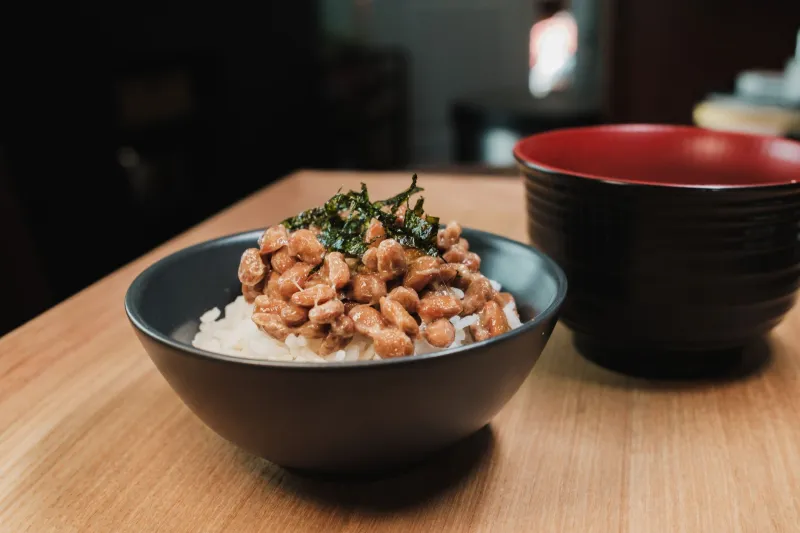
A typical Hokkaido home dinner might center on a single piece of carefully sourced fish—perhaps salmon from the Tokachi River region—seasoned with nothing more than salt and a touch of mirin before being grilled over high heat. Alongside it: a bowl of rice, a small dish of pickled vegetables, and a clear dashi broth made from two ingredients only, kombu and katsuobushi. That is the meal. There is no elaborate sauce, no layered spice profile, no garnish competing for attention.
What makes it extraordinary is not simplicity as an aesthetic choice but simplicity as a technical one. When a cook commits to fewer ingredients, several things happen simultaneously. First, sourcing standards rise: there is nowhere to hide a mediocre piece of fish when it is the unambiguous centerpiece of the plate. Second, technique sharpens: without sauces and seasonings to compensate, the quality of a sear, the precision of a salt ratio, or the timing of a braise becomes the entire story. Third, the cook develops a more intimate understanding of each ingredient's individual behavior—how it responds to heat, how it changes over time, what it needs and what diminishes it.
"American recipes often ask you to add more when something isn't working," says Marcus Webb, a home cook based in Portland, Oregon, who began experimenting with Hokkaido-inspired minimalism after purchasing kombu and Hokkaido sea salt through an online specialty retailer. "I used to think a dish tasted flat because it needed another ingredient. Now I understand it usually just needs better versions of the two or three it already has."
The Psychological Dividend of a Smaller Pantry
Beyond flavor, there is a measurable psychological benefit to cooking with restraint that American home cooks are beginning to document in their own kitchens. Decision fatigue—the cognitive exhaustion that comes from making too many choices—is a well-established phenomenon in behavioral psychology. A pantry stocked with sixty specialty items does not necessarily make dinner easier; it often makes it harder, because every meal begins with a small but draining negotiation between options.
Hokkaido's minimalist approach sidesteps this problem entirely. When your pantry contains a small number of high-quality, versatile staples—a block of aged miso, dried kombu, a quality soy sauce, perhaps a bottle of hon-mirin—the path from raw ingredients to finished meal becomes shorter and more intuitive. Cooks report not only better food but a more relaxed relationship with cooking itself.
Dr. Yumi Harada, a food anthropologist who has studied the domestic cooking habits of rural Hokkaido households, frames it this way: "The minimalist pantry is not a limitation. It is a form of editorial authority. The cook has already made the important decisions before the meal begins. What remains is craft, not confusion."
How to Begin: A Practical Framework for American Kitchens
Adopting this philosophy does not require discarding everything currently in your pantry. It requires a different relationship with what you choose to stock and why.
Start with a foundational trio. In Hokkaido cooking, three ingredients form the backbone of nearly every dish: dashi (the clear, umami-rich stock made from kombu and dried fish), quality salt, and a well-aged miso. These three elements, in various combinations and proportions, can produce soups, braises, marinades, glazes, and sauces of remarkable range. Before reaching for anything else, ask whether one of these three can solve the problem.
Audit for redundancy. Most American pantries contain multiple ingredients that perform essentially the same function—three different hot sauces, two types of soy sauce, several overlapping vinegars. Identify these duplicates and consolidate. Choose one exceptional version of each category and remove the rest. The act of choosing forces clarity about what you actually value.
Practice the single-protein rule. Select one protein per meal and resist the impulse to supplement it. When Hokkaido sea scallops are the centerpiece, they do not need to share the plate with shrimp. Give each ingredient its full moment and observe how differently you taste it when it has no competition.
Invest in quality over variety. The economics of minimalist cooking are frequently misunderstood. A smaller pantry does not mean a cheaper one; it means a better-allocated one. Spending more on a single premium ingredient—Hokkaido kombu harvested from cold northern waters, for instance, rather than a generic dried seaweed—and using it as the foundation of multiple meals across a week is both more economical and more flavorful than spending the same amount across a wider range of mediocre products.
What the Hokkaido Pantry Teaches Us About Flavor
The deeper lesson of Hokkaido's minimalist tradition is not about subtraction. It is about attention. When you commit to fewer ingredients, you are forced to understand each one more completely—its seasonality, its optimal preparation method, its natural affinities and its limits. That understanding accumulates over time into something that looks, from the outside, like culinary intuition but is, in practice, simply the product of focused repetition.
American cooking culture has long celebrated addition: more flavors, more techniques, more courses, more complexity. Hokkaido offers a different model—one in which the cook's authority is expressed not through what they include but through what they choose to leave out. In that space, flavor finds room to breathe.
For home cooks willing to experiment with that restraint, the results are often surprising. Meals become more coherent. Ingredients become more legible. And the kitchen, rather than feeling like a site of endless improvisation, begins to feel like something closer to a practice—disciplined, focused, and quietly rewarding in ways that a crowded spice cabinet rarely is.