Nothing Wasted, Everything Gained: Hokkaido's Seafood Scrap Traditions and the American Kitchen's Next Frontier
There is a quiet philosophy embedded in Hokkaido's coastal cooking culture — one that has never required a name because it was simply understood as common sense. When fishing vessels return to ports in Hakodate, Kushiro, or Wakkanai, every part of the catch carries value. The prized flesh earns its place on the dinner table. But the collars, heads, shells, and trimmings? Those are not waste. They are, in the eyes of Hokkaido's most seasoned cooks, the foundation of the kitchen's most powerful flavors.
As zero-waste cooking gains serious momentum across the United States — in restaurant kitchens from Portland to New York, and increasingly in home pantries — Hokkaido's approach to seafood byproducts offers something more than an ecological argument. It offers a genuinely superior culinary result.
The Science Behind the Scrap
Understanding why seafood byproducts produce such extraordinary flavor requires a brief detour into food chemistry. Umami — the savory, mouthcoating quality that makes a dish feel complete — is driven primarily by glutamates and nucleotides such as inosinate and guanylate. These compounds are not distributed evenly across a fish or crustacean. They concentrate in the bones, cartilage, skin, and organ-adjacent tissue.
A fish collar, for example, contains a higher ratio of collagen-rich connective tissue than the fillet. When simmered gently, that collagen converts to gelatin, producing a stock with remarkable body and a lingering savory finish. Shrimp and crab shells carry concentrated amounts of chitin alongside amino acids that, when toasted briefly before simmering, develop a roasted, almost nutty depth that no amount of seasoning can replicate from scratch.
Hokkaido's fishing communities have worked with these properties intuitively for generations. The science simply confirms what their palates already knew.
Shrimp Heads and the Art of the Miso Base
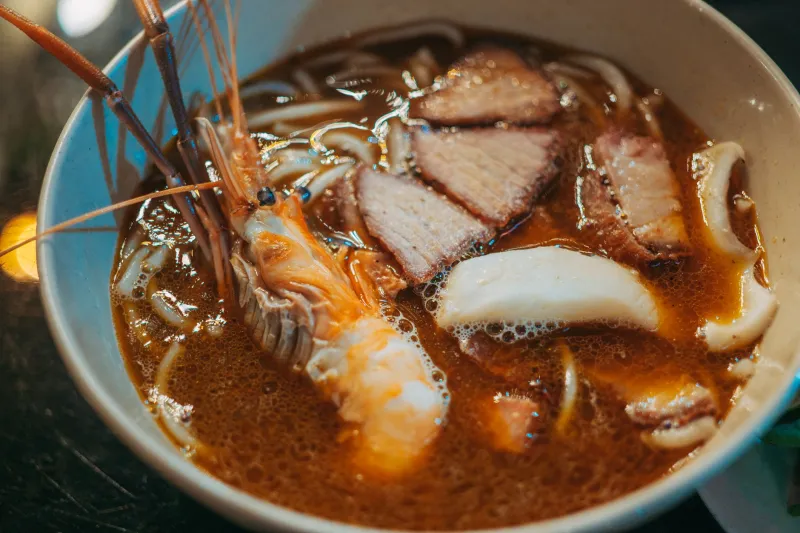
One of the most practical and transformative techniques drawn from Hokkaido tradition involves shrimp heads — the part most American cooks reflexively discard. In Hokkaido, particularly in regions where botan ebi (spot prawns) and hokkai shrimp are harvested in abundance, the heads are treated as a seasoning ingredient in their own right.
The process begins with a dry toast in a heavy pan, no oil required, until the shells shift from translucent to a deep, burnished orange. At this point, the Maillard reaction has done its work: the shells carry a complex, caramelized aroma that is distinctly oceanic but also rich with roasted undertones. From here, they can be simmered into a concentrated shellfish dashi, blended with Hokkaido miso to create a seasoning paste, or used to infuse neutral oils that serve as finishing drizzles for soups, grain bowls, and roasted vegetables.
For American home cooks purchasing whole or shell-on shrimp — increasingly common at specialty seafood counters and through online retailers — this technique represents an immediate upgrade to dishes they are likely already preparing.
Fish Collars: The Cut Worth Fighting For
The collar, known in Japanese as kama, sits just behind the gills and includes the pectoral fin and surrounding tissue. In Japan, it is considered a prized cut — one that regulars at izakayas quietly request before it disappears from the kitchen. In the United States, it has historically been discarded by processors or sold at deep discount, which means that for the attentive shopper, it represents extraordinary value.
Hokkaido's approach to the fish collar centers on restraint. A collar from a salmon — one of Hokkaido's most celebrated exports — requires very little intervention. Salt, a brief cure of thirty minutes to an hour, and a high-heat broil or grill is sufficient to render the fat beneath the skin, crisp the exterior, and produce flesh that is simultaneously richer and more nuanced than the fillet itself. The bones and remaining tissue, once the meat is eaten, go directly into a simmering pot with kombu and a small amount of sake, yielding a dashi that forms the backbone of a refined miso soup or a delicate chawanmushi.
This is the nose-to-tail principle applied to the sea — and it delivers on both its environmental promise and its culinary one.
Scallop Trimmings and the Case for the Adductor Muscle's Neighbors
Hokkaido is Japan's foremost producer of hotate scallops, and the industry generates significant byproduct material beyond the adductor muscle that most consumers recognize. The coral (roe), the mantle, and the small muscle that anchors the scallop to its shell are all edible, flavorful, and routinely available through specialty importers who work directly with Hokkaido processors.
The coral, in particular, carries a concentrated brininess that lends itself well to compound butters, pasta sauces, and emulsified dressings. A small amount blended into softened butter and chilled produces a finishing element that elevates grilled fish, steamed rice, or roasted root vegetables in a single step. The mantle, with its more delicate texture, can be simmered briefly and incorporated into chowders or used as a garnish for cold seafood preparations.
These are not exotic techniques requiring professional training. They are practical applications of an existing Hokkaido tradition, adapted for a home kitchen equipped with standard tools and a willingness to look at ingredients differently.
Building a Zero-Waste Pantry with Hokkaido Staples
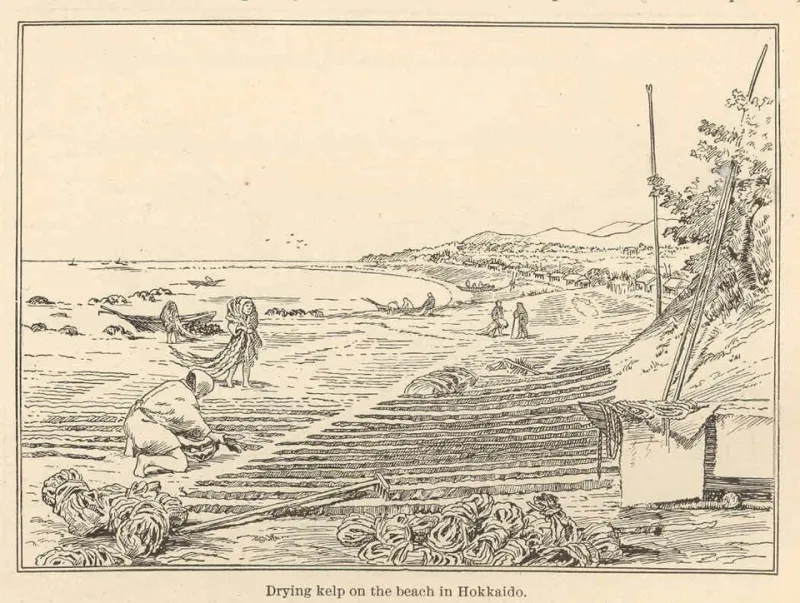
The connective thread across all of these techniques is the supporting cast of Hokkaido pantry ingredients that amplify the byproducts' inherent qualities. Kombu — the thick, mineral-rich kelp harvested from Hokkaido's cold northern waters — is indispensable. It contains some of the highest natural concentrations of glutamic acid found in any food, which means that even a modest piece added to a shellfish or fish collar stock will dramatically intensify the umami present.
Hokkaido miso, whether white, red, or blended, provides both salinity and a fermented complexity that rounds out stocks and seasoning pastes. Sake, used as both a deglazing liquid and a simmering medium, draws out proteins and aromatics while tempering any residual fishiness. Mirin adds a subtle sweetness that balances the intensity of concentrated seafood flavors.
For American cooks interested in building this kind of pantry, these ingredients are available through specialty Japanese food retailers and increasingly through dedicated importers such as Hokkaido Bussan, where sourcing is tied directly to regional producers.
A Different Kind of Value Proposition
Zero-waste cooking is often framed as a sacrifice — a choice made for environmental reasons that requires accepting a lesser culinary experience. Hokkaido's seafood traditions dismantle that framing entirely. The byproducts that its fishing communities have long prized are not second-tier ingredients. They are, in many cases, the most flavorful parts of the animal, requiring only the knowledge and willingness to use them.
For the American home cook, that knowledge is now accessible. The ingredients are increasingly available. And the results — a shrimp-head miso butter stirred into ramen broth, a salmon collar cured and broiled to crackling perfection, a scallop coral compound butter melting over grilled asparagus — speak for themselves in a language that requires no translation.
This is Hokkaido's umami equation, and its answer has always been the same: nothing wasted, everything gained.