Roots, Leaves, and Rhizomes: A US Gardener's Guide to Cultivating Hokkaido's Most Treasured Culinary Herbs
For generations, Hokkaido home cooks have relied on a small but irreplaceable collection of fresh herbs and aromatic plants to define the character of their cuisine. Shiso, wasabi, myoga ginger, and Japanese perilla are not mere garnishes in this tradition—they are structural flavor elements, as fundamental to a well-composed dish as salt or heat. Yet for American cooks, access to these ingredients remains frustratingly inconsistent. Specialty grocery stores stock them sporadically, and the quality is rarely what it should be by the time a leaf or rhizome reaches the shelf.
The solution, for those willing to pursue it, is straightforward: grow them yourself. Hokkaido's climate—cool summers, abundant moisture, and well-drained volcanic soils—is not as foreign to American growing conditions as it might seem. Large portions of the Pacific Northwest, the upper Midwest, and the Northeast share enough climatic overlap with northern Japan to support many of these plants with minimal adaptation. Even gardeners in warmer zones have container-based options that sidestep temperature incompatibilities.
Shiso: The Herb That Does Everything
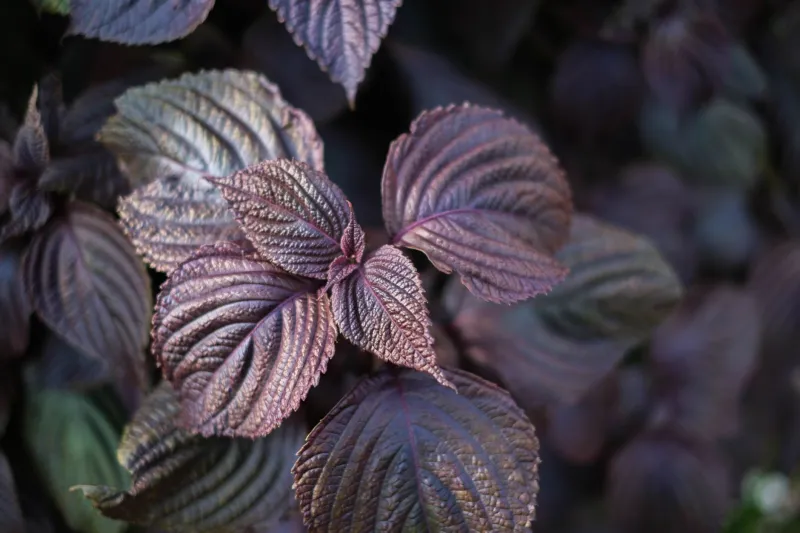
Of all the plants worth adding to an American kitchen garden, shiso (Perilla frutescens var. crispa) offers the highest return on effort. Both the green and purple varieties grow vigorously in USDA hardiness zones 5 through 10, behaving as warm-season annuals in most of the continental United States. In Hokkaido, shiso is prized for its complex fragrance—a layered blend of anise, mint, and a faint citrus note—that intensifies when leaves are torn rather than cut.
Planting timeline: Start seeds indoors six to eight weeks before the last frost date in your region. Shiso germinates best at soil temperatures between 65°F and 75°F. In USDA zones 7 and above, direct sowing outdoors after frost risk has passed is equally effective. Space plants twelve inches apart in full sun to partial shade; Hokkaido's relatively cool summers mean that in hotter American climates, afternoon shade actually improves leaf quality by slowing the plant's tendency to bolt.
Culinary application: Fresh shiso leaves elevate cold somen noodles, wrap around grilled fish in place of foil, and, when finely chiffonaded, add complexity to vinaigrettes that no dried substitute can approximate. The purple variety, called akajiso, is traditionally used to color umeboshi plums and adds a subtle earthiness to pickled vegetables.
Troubleshooting: American gardeners frequently report that shiso self-seeds aggressively after its first season. This is not a problem—it is a feature. Allow a few plants to flower and go to seed in late summer, and you will have a self-sustaining patch with minimal replanting effort in subsequent years.
Wasabi: The Most Demanding Plant in the Hokkaido Herb Garden
Real wasabi (Wasabia japonica) is not the green paste in most American sushi restaurants, which is typically a blend of horseradish, mustard, and food coloring. Authentic wasabi is a semi-aquatic plant native to Japan's mountain stream valleys, and Hokkaido's cold, clean water has long supported premium cultivation. Growing it in the United States requires patience, the right microclimate, and a willingness to accept that this is not a beginner's crop.
Climate requirements: Wasabi thrives in cool, humid environments with consistent temperatures between 46°F and 70°F. In the US, this translates most naturally to the Pacific Northwest—western Oregon, western Washington, and coastal Northern California. In other regions, container cultivation in a shaded, cool corner of the garden, supplemented with regular misting, is the most realistic approach.
Planting and care: Wasabi can be started from rhizome divisions or, less commonly, from seed. Rhizome divisions are more reliable and are available from specialty nurseries in the United States. Plant in rich, moisture-retentive soil with excellent drainage—wasabi roots in standing water, but it does not tolerate stagnation. A layer of coarse gravel beneath the growing medium helps replicate the streambed conditions the plant prefers in its native habitat.
Harvest and use: The rhizome, which is the part used as a condiment, typically requires eighteen months to two years to reach harvestable size. The leaves and stems, however, are edible much sooner and carry a milder, grassier heat. In Hokkaido kitchens, wasabi leaves are pickled in soy sauce and served alongside grilled meats, offering a use for the plant well before the rhizome matures.
A note on expectations: Freshly grated wasabi rhizome, prepared on a sharkskin grater just before serving, tastes nothing like the commercial paste most Americans know. The heat is volatile, dissipating within minutes of grating, and the flavor is floral, complex, and genuinely surprising. This alone makes the two-year wait worthwhile for serious home cooks.
Myoga: Hokkaido's Underrated Ginger Relative
Myoga (Zingiber mioga) occupies a curious place in Japanese culinary culture—it is widely used in home cooking but almost completely unknown outside Japan. Unlike common ginger, it is the flower bud and young shoot that are eaten, not the rhizome. The flavor is delicate: a muted ginger warmth layered with floral, almost citrusy notes that complement cold tofu, miso soup, and grilled fish without overwhelming them.
Growing conditions: Myoga is hardier than most American gardeners expect. It survives winters in USDA zones 7 through 10 as a perennial, dying back to the ground in cold weather and returning reliably each spring. In zones 5 and 6, a thick layer of mulch over the root zone typically provides sufficient cold protection. The plant prefers dappled shade and consistent moisture—conditions that make it an ideal candidate for planting beneath deciduous trees.
Harvest window: Flower buds emerge at soil level in late summer, typically between July and September depending on your location. They should be harvested just as the bud begins to show color but before it fully opens; once the flower blooms, the culinary quality diminishes quickly. A single established clump can produce dozens of buds over a season, making myoga one of the most generous plants in this category.
Mitsuba: Japanese Parsley for the Shaded Corner
Mitsuba (Cryptotaenia japonica), sometimes called Japanese parsley or trefoil, is a shade-tolerant perennial that fills a gap in most American herb gardens. Its flavor sits at the intersection of celery, parsley, and mild anise—subtle enough to use in quantity, distinctive enough to be missed when absent. In Hokkaido, it appears in clear soups, egg dishes, and as a finishing herb for braised vegetables.
Mitsuba grows readily in zones 4 through 9 and actively prefers the kind of moist, partially shaded spots that defeat most other culinary herbs. Start from seed in early spring, transplant to a shaded bed after the last frost, and expect a productive plant by midsummer. Unlike shiso, mitsuba does not bolt in heat if kept adequately shaded and watered.
Why Homegrown Always Outperforms Store-Bought
The argument for growing these herbs is not merely economic, though the cost comparison is compelling. It is fundamentally about access to a quality of ingredient that the commercial supply chain cannot deliver. Shiso loses a measurable percentage of its volatile aromatic compounds within twenty-four hours of harvest. Wasabi rhizome, once grated, begins degrading within minutes. Myoga buds, picked at the precise moment of peak flavor, are simply unavailable in any American retail channel.
For the home cook who has invested in quality Hokkaido pantry staples—premium miso, aged soy sauce, authentic dashi components—the addition of freshly grown aromatics from the same culinary tradition represents a logical and rewarding next step. The flavor gap between a dish made with genuine fresh shiso and one made with dried flakes is not a matter of degree; it is a categorical difference that reshapes what the finished plate can be.