Snow Crab and Sea Urchin: How Hokkaido's Most Prized Seafood Found a Home in the American Kitchen

Photo: Hokkaido snow crab legs and sea urchin uni on ice Japanese seafood, via i.pinimg.com
Ask most Americans where they first encountered sea urchin, and the answer is almost invariably the same: a sushi counter, probably in a major coastal city, and almost certainly at a price point that gave them pause. Snow crab, meanwhile, has long been a fixture of the American seafood landscape—but typically in forms that bear little resemblance to the plump, sweet clusters harvested from Hokkaido's frigid northern waters.
That gap between perception and reality is narrowing. A new generation of American home cooks, emboldened by better access to imported Japanese seafood and a cultural appetite for authenticity, is beginning to treat Hokkaido snow crab and uni not as occasional restaurant luxuries but as ingredients worthy of serious home preparation.
Why Hokkaido's Waters Produce Superior Seafood
The quality differential between Hokkaido seafood and comparable products from other regions is not a matter of marketing. It is rooted in oceanography.
The waters surrounding Hokkaido—particularly the Sea of Okhotsk to the north and east—are among the coldest and most nutrient-dense marine environments on the planet. Seasonal ice melt carries vast quantities of phytoplankton into these waters each spring, creating a feeding ground of extraordinary richness. Marine life in cold water grows more slowly than in temperate or tropical seas, and that slower growth translates directly into denser, more concentrated flavor.
Hokkaido snow crab (Chionoecetes opilio, known in Japanese as zuwaigani) benefits enormously from this environment. The meat is notably firmer and sweeter than snow crab harvested from the Bering Sea, with a clean oceanic finish that requires very little embellishment to appreciate. Hokkaido uni—sea urchin roe—is similarly distinguished. The two most prized varieties from the region, Murasaki uni and Bafun uni, are celebrated for their creamy texture and a sweetness that is entirely absent from the bitter, iodine-heavy uni that gives many first-time eaters an unfavorable impression of the ingredient.
Understanding Seasonal Availability
Timing matters considerably when purchasing Hokkaido seafood, and American consumers who understand the seasonal calendar will make far better buying decisions.
Hokkaido snow crab season runs roughly from November through March, with peak harvest occurring in the coldest months of January and February. During this period, live and fresh-frozen crab is exported in its highest volume, and quality is at its most consistent. Outside of this window, frozen product from the previous season remains available, but discerning buyers will want to verify harvest dates when possible.
Uni availability follows a different rhythm. Bafun uni—the smaller, richer of the two primary Hokkaido varieties—peaks in late winter and early spring, while Murasaki uni is harvested predominantly in summer. Premium uni is typically sold in wooden trays (called kata) and graded by color, texture, and freshness. The deepest golden-yellow examples command the highest prices and deliver the most complex flavor.
For American buyers, the practical implication is straightforward: purchase Hokkaido snow crab and uni during their respective peak seasons whenever possible, and be willing to pay a modest premium for product with clear provenance and verified harvest dates. The quality difference justifies the investment.
Selecting and Storing These Delicacies
Fresh Hokkaido snow crab legs, when available through specialty importers, should have a clean ocean scent with no trace of ammonia. The shell should be intact and free of discoloration, and the meat should spring back slightly when pressed. For most American home cooks, however, the more practical option is high-quality individually quick-frozen (IQF) crab legs, which are flash-frozen immediately after harvest and retain their quality remarkably well.
Thaw frozen crab legs slowly in the refrigerator overnight rather than under running water. This preserves the texture of the meat and prevents the outer shell from warming faster than the interior, which can cause uneven cooking. Once thawed, crab legs should be consumed within 24 hours.
Uni requires more careful handling. Fresh uni in trays should be consumed on the day of purchase or, at most, the following day. It should never be frozen, as the delicate cellular structure of the roe collapses irreversibly upon thawing, resulting in a watery, unpleasant texture. When purchasing uni online or through a specialty retailer, confirm that it will be shipped with sufficient cold packs and arrive within a two-day transit window.
Preparation Methods: From Simple to Sophisticated
One of the most liberating truths about Hokkaido snow crab and uni is that their finest qualities are best expressed through simplicity.
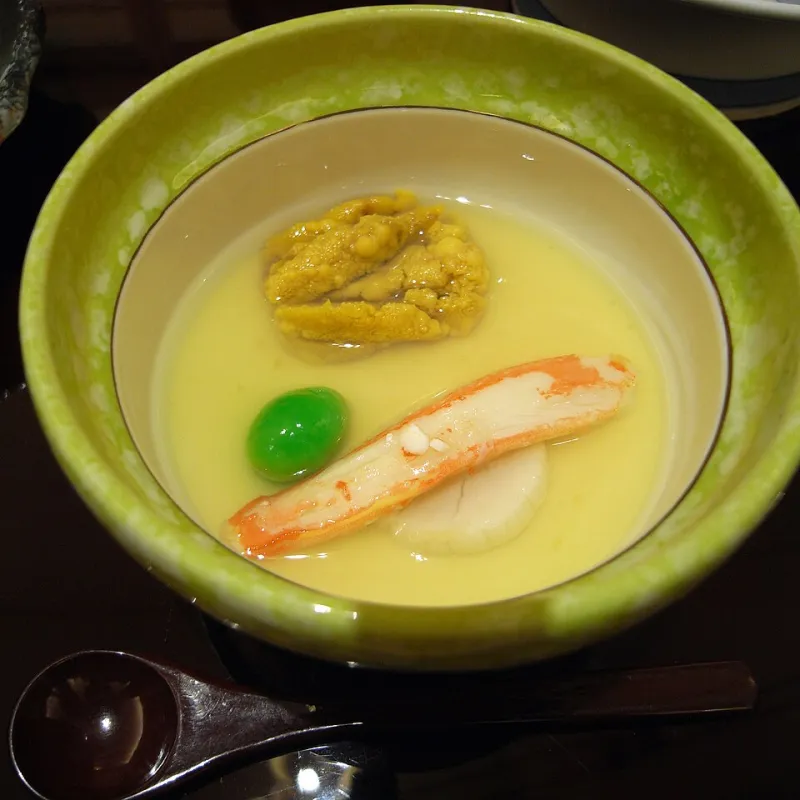
Steamed or lightly grilled snow crab legs, served with a small dish of ponzu and a few shavings of yuzu zest, require almost no culinary skill and yet deliver an experience that rivals anything available at a mid-range seafood restaurant. For a more involved preparation, crab meat extracted from the legs can be incorporated into a warm chawanmushi (Japanese steamed egg custard) or folded into a butter-enriched pasta with dashi and a whisper of soy sauce—a preparation that has become something of a signature dish among Japanese-Italian fusion enthusiasts.
Uni is at its most transcendent eaten raw, ideally on a small bed of seasoned rice with a dab of wasabi and a few drops of soy sauce. This preparation, known as uni don when served over a full bowl of rice, has become one of the most sought-after dishes at upscale Japanese restaurants in cities like New York and Los Angeles. At home, it is straightforward to assemble and far more economical than dining out.
For cooks who find raw uni intimidating as a starting point, a warm application offers a gentler introduction. Uni butter—made by blending fresh uni with softened Hokkaido butter, a pinch of sea salt, and a drop of soy sauce—can be spread over grilled bread, melted over grilled fish, or tossed with fresh pasta. The heat mellows the roe's intensity while preserving its distinctive sweetness.
Pairing Suggestions for the American Table
Hokkaido snow crab pairs naturally with dry, mineral-driven white wines—a well-made Chablis or an unoaked domestic Chardonnay from the Sonoma Coast will complement rather than compete with the crab's delicate sweetness. For a non-alcoholic option, cold-brewed Japanese green tea offers a clean, vegetal counterpoint that works surprisingly well.
Uni's richness calls for acidity as a counterbalance. Champagne and dry sparkling wines are the classic pairing for good reason, but a crisp Grüner Veltliner or a high-quality domestic Pinot Gris can be equally effective. Avoid heavily oaked wines, which will overpower the roe's nuance.
An Investment Worth Making
There is a reasonable argument to be made that Hokkaido snow crab and sea urchin represent the highest expression of what cold-water seafood can be. For American home cooks willing to invest the time in sourcing quality product and learning a few foundational preparation techniques, the return on that investment—in flavor, in culinary knowledge, and in the quiet satisfaction of serving something genuinely extraordinary at your own table—is considerable.
The luxury restaurant is no longer the only venue where these ingredients belong.