From Field to Pantry: Why Hokkaido's Potatoes, Corn, and Root Vegetables Are Setting a New Standard for American Specialty Foods
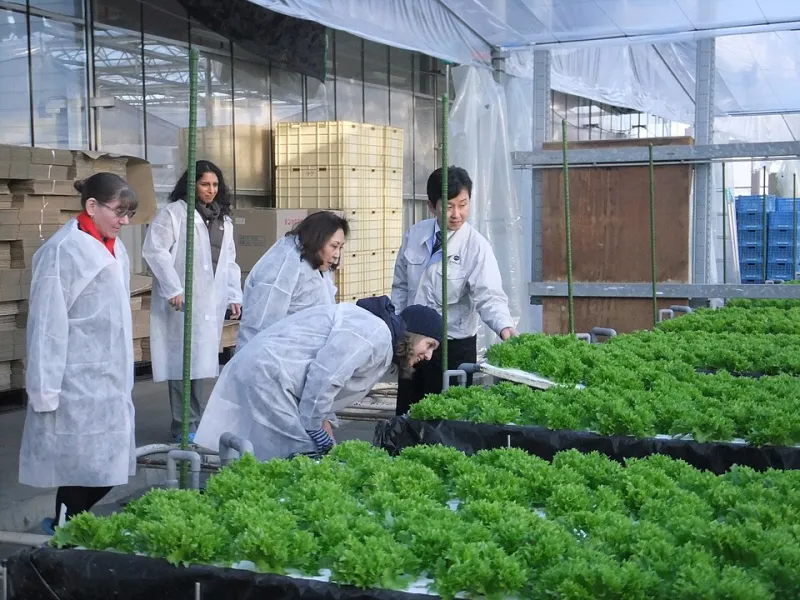
Photo: U.S. Embassy Tokyo Press, Public domain, via Wikimedia Commons
Spend any time exploring the specialty food aisles of Japanese grocery stores in major American cities, and a pattern begins to emerge. Snacks and packaged ingredients bearing Hokkaido's name command a price premium and a devoted customer base that extends well beyond Japanese diaspora communities. The products in question are not always exotic: potato chips, corn-based confections, starch products, and dried root vegetables. What distinguishes them is not novelty but a quality standard that reflects something fundamental about where and how they are grown.
Hokkaido's agricultural reputation is well established within Japan, where the island supplies a disproportionate share of the country's domestic produce. What is less widely understood in the United States is the specific combination of factors—geological, climatic, and cultural—that makes Hokkaido's field crops genuinely different from their counterparts grown elsewhere, and why that difference is increasingly legible to American consumers who have developed a sharper palate for ingredient quality.
The Geography of Flavor: Why Hokkaido's Climate Is an Agricultural Asset
Hokkaido sits at a latitude roughly equivalent to the northern tier of the continental United States—comparable to Minnesota or northern Oregon. Its winters are long and severe, its growing season compressed into a period of intense productivity between late spring and early autumn. These conditions, which might appear to be limitations, are in practice significant agricultural advantages for certain crops.
The island's soils bear the influence of volcanic geology, particularly in the central and eastern regions, where mineral-rich earth provides a naturally fertile growing medium that requires less chemical amendment than many agricultural zones. Combined with the island's relatively low humidity during the growing season and its pronounced temperature differential between day and night, Hokkaido's climate produces crops with concentrated sugars, firm textures, and a flavor complexity that warmer, more uniform growing environments rarely replicate.
For potatoes specifically, this temperature differential is decisive. Cool nights slow the conversion of sugars to starch, preserving a natural sweetness that distinguishes Hokkaido varieties from those grown in more temperate climates. The same principle applies to Hokkaido corn, which has developed a devoted following in Japan and is increasingly recognized in American specialty food circles for a sweetness and tenderness that seems disproportionate to its modest appearance.
The Potato Economy: From Staple Crop to Specialty Ingredient
Hokkaido accounts for roughly eighty percent of Japan's domestic potato production—a statistic that reflects both the scale of the island's agricultural capacity and the degree to which its farmers have refined their approach to a single crop over generations. The island cultivates a range of varieties, from the workhorse Danshaku—a round, starchy potato suited to soups and croquettes—to the waxy May Queen, prized for salads and preparations where texture retention matters.
What has changed in recent decades is the ambition applied to these potatoes beyond the fresh produce market. Hokkaido producers have invested significantly in processing infrastructure, recognizing that value-added products offer both better margins and the opportunity to reach consumers who may never encounter a fresh Hokkaido potato but will readily purchase a bag of chips, a package of freeze-dried potato cubes, or a container of specialty potato starch.
The results of this investment are visible on shelves at specialty retailers and available through importers who serve health-conscious American consumers. Hokkaido potato chips—produced in small batches using minimal seasoning to allow the ingredient itself to carry the flavor—have found a loyal audience among snack enthusiasts who have grown weary of the uniform, aggressively seasoned products that dominate conventional grocery aisles. The flavor difference is not subtle: a properly made Hokkaido potato chip delivers a clean, slightly sweet finish that lingers in a way that mass-market products simply do not.
Corn That Earns Its Price Tag
Hokkaido's corn—known domestically as tomorokoshi—occupies a similar position in the Japanese food imagination to what heirloom tomatoes represent in American food culture: a seasonal, regionally specific product whose quality justifies both the premium and the anticipation. Fresh Hokkaido corn is harvested during a narrow summer window and is consumed in Japan with a reverence that American sweet corn, for all its virtues, rarely inspires.
For American consumers, fresh Hokkaido corn remains largely inaccessible for obvious logistical reasons. What has successfully crossed the Pacific is a range of corn-derived products—freeze-dried kernels, corn-based confections, and flavoring ingredients—that capture a meaningful portion of the original ingredient's character. Freeze-drying technology, which Hokkaido producers have adopted with considerable sophistication, preserves sugar content and cellular structure in ways that conventional drying cannot, delivering a product that reconstitutes with surprising fidelity to the fresh original.
Corn-flavored snacks produced in Hokkaido represent one of the more commercially successful export categories, not because they rely on artificial flavoring but precisely because they do not. The intensity of Hokkaido corn's natural sweetness is sufficient to carry a product without the enhancement that manufacturers using lower-quality source ingredients typically require.
Root Vegetables and the Rise of Functional Ingredients
Beyond potatoes and corn, Hokkaido's agricultural output includes a range of root vegetables—burdock root, lotus root, daikon radish, and various sweet potato varieties—that are attracting growing interest from the American health food market. This interest is driven in part by the nutritional attributes of these vegetables (high fiber content, prebiotic properties, and meaningful micronutrient profiles) and in part by a broader shift in American cooking toward vegetables that offer both flavor complexity and functional benefits.
Hokkaido burdock root, known as gobo, is perhaps the most compelling example. Harvested in autumn and available in dried or processed forms through specialty importers, gobo offers an earthy, slightly sweet flavor with a firm texture that holds up well in braises, stir-fries, and slow-cooked preparations. Its inulin content—a prebiotic fiber with well-documented digestive health benefits—has made it a point of interest among American consumers who follow gut-health-conscious diets.
Hokkaido producers have responded to this interest with thoughtful product development: gobo chips, dried gobo strips suited to stock-making, and gobo-based tea products that deliver the vegetable's functional attributes in an accessible format.
What to Look for When Shopping Hokkaido Produce Products
For American consumers navigating the specialty food market, a few practical guidelines help distinguish genuinely high-quality Hokkaido agricultural products from those that trade on the name without delivering the underlying quality.
Ingredient transparency matters. The best Hokkaido potato and corn products list minimal ingredients—the primary vegetable, perhaps a small amount of salt or oil, and nothing else. A lengthy ingredient list is rarely consistent with the quality proposition that authentic Hokkaido agricultural products represent.
Processing method is significant. Freeze-dried products generally preserve more of the original ingredient's flavor and nutritional character than heat-dried alternatives. When available, opt for freeze-dried formats of corn, root vegetables, and similar ingredients.
Origin specificity is a quality signal. Products that identify not just "Hokkaido" but the specific growing region—Tokachi, Furano, Kamikawa—reflect a producer with genuine knowledge of and pride in their source material.
At Hokkaido Bussan, our selection of agricultural products from the island reflects these criteria. We work with producers whose relationship to their land is legible in the quality of what they ship, and we believe that the story behind a bag of potato chips or a package of dried burdock root is as relevant as the product itself.
The Larger Lesson from Hokkaido's Fields
Hokkaido's agricultural success with potatoes, corn, and root vegetables offers a broader insight that resonates with where American food culture is heading: that ingredient quality is not a luxury consideration but a practical one, and that the gap between a mediocre version of a humble ingredient and an exceptional one is often determined not by complexity but by the care applied to growing, harvesting, and processing. Hokkaido's farmers have understood this for generations. American consumers are catching up.